
There’s something irresistibly comforting about this layered casserole of flavors and textures. The Salmon Sushi Bake Recipe takes the essence of sushi and turns it into a cozy, shareable dish that’s perfect for gatherings or a special weeknight treat.

Jump to:
Why You'll Love This Recipe
Honestly, this Salmon Sushi Bake Recipe has become one of my go-to shows for comfort food with a fancy twist. It’s sushi-inspired but doesn’t require rolling skills—just layers of deliciousness you can scoop up with ease.
- Easy to Make: No rolling or special sushi tools needed, just layering and baking.
- Full of Flavor: The combination of creamy, savory, and umami-packed ingredients hits every craving.
- Great for Sharing: It's made in a casserole dish, so it’s perfect for parties or family dinners.
- Customizable: You can tweak the spice levels and garnishes to suit your taste—like adding more sriracha or fresh veggies.
Ingredients & Why They Work
This dish brings together beautifully cooked sticky rice, rich salmon, and creamy cheese layered with flavorful sauces and nori. Each element plays its part, creating a balance of textures and tastes that's pure magic in every bite.

- Wild sockeye salmon filet: Offers deep flavor and a firm, flaky texture perfect for baking without drying out.
- Soy sauce: Adds umami and a subtle saltiness that complements the fish.
- Sticky sushi rice: The essential base—make sure it’s well-cooked and sticky enough to hold the layers together.
- Rice vinegar: Brightens the rice with a classic sushi tang, cutting through the richness.
- Nori sheets: Infuse that unmistakable seaweed taste, grounding the dish in sushi tradition.
- Cream cheese: Creates a smooth, tangy layer that contrasts beautifully with the salmon.
- Sriracha mayonnaise: Brings heat and creaminess—adjust the amount depending on your spice tolerance.
- Chopped green onions: Adds crunch and a fresh onion bite to finish.
- Eel sauce (or oyster sauce): Sweet and savory drizzle for that final luscious glaze.
- Furikake rice seasoning: A sprinkle of flavor and texture — sesame seeds, seaweed flakes, and more.
- Optional garnishes: Fresh radish, cucumber, jalapeño, avocado, or pickled ginger all add brightness and crunch.
Make It Your Way
I love how versatile this Salmon Sushi Bake Recipe is. Sometimes I turn up the heat with extra sriracha mayo or swap out the cream cheese for a lighter spread when I want to keep it fresher and less rich. You should definitely play with it to find your favorite version!
- Variation: One time, I added chopped mango on top after baking for a sweet, juicy surprise — it was a hit! You can also swap salmon for cooked shrimp or crab if you prefer.
- Diet-friendly: For a lower-carb twist, try cauliflower rice instead of sticky rice — it changes the texture but keeps the flavors.
- Herbs and extra crunch: Fresh cilantro or finely chopped chives add a different aromatic note if you want to experiment.
Step-by-Step: How I Make Salmon Sushi Bake Recipe

Step 1: Prep and Bake the Salmon
Start by preheating your oven to 400°F. I use a large rimmed baking sheet lined with parchment—it keeps cleanup simple. Lay down your wild sockeye salmon filet, drizzle soy sauce evenly on top, and bake for about 15 minutes until the salmon flakes easily with a fork. Be careful not to overcook; you want it tender and juicy, not dry. Once done, let it cool a bit before handling.
Step 2: Prepare the Rice Layer
While the salmon bakes, grab a 9 x 13-inch baking dish and give it a quick spritz of nonstick spray. Dump in your cooked sticky rice and drizzle with rice vinegar. Toss gently by hand to mix evenly, then press it firmly into an even layer—this base is what holds all those delicious layers together. Don’t skip pressing it down; it makes scooping so much easier later.
Step 3: Add Nori and Cream Cheese Layers
Lay the nori sheets evenly over the rice; sometimes I trim them with scissors so there aren’t any gaps. Then spread the softened cream cheese on top with a flat spatula or frosting spreader—aim for a smooth, even coat. This creamy layer is key for richness and balance, so don’t rush it!
Step 4: Combine Salmon and Sriracha Mayo
Once your salmon is cool enough to touch, peel off the skin and crumble the fish into a mixing bowl. Add sriracha mayo and stir until everything’s combined nicely. This spicy, creamy salmon topping is what really makes the dish stand out. Spread it evenly over the cream cheese layer.
Step 5: Final Bake & Cooling
Pop the whole dish back in the oven and bake for another 10 to 15 minutes. You want the salmon layer to set but not dry out. When it’s done, let it cool for at least 10 minutes. If you can wait longer, refrigerate it to firm up; it makes for cleaner slicing. Cut into 12 to 24 squares—depending on the size you want.
Step 6: Garnish and Serve
Before serving, sprinkle furikake seasoning on top for that classic Japanese rice flavor and texture. Drizzle with eel sauce and sprinkle chopped green onions all over. I also love adding thin slices of fresh cucumber, radish, or jalapeño for extra crunch and zing.
Top Tip
Through making this Salmon Sushi Bake Recipe several times, these tips have made all the difference in how well it turns out, so I wanted to share what works best!
- Use quality salmon: Fresh wild sockeye really shines here for flavor and texture—don’t be tempted to substitute with frozen without thawing carefully.
- Press the rice firmly: This simple step helps the bake hold together when you cut it into pieces.
- Don’t overbake the salmon topping: Keep an eye during the final bake to avoid dryness and maintain moist, tender flakes.
- Let it cool before slicing: This prevents the layers from falling apart, giving you neat squares that look as good as they taste.
How to Serve Salmon Sushi Bake Recipe

Garnishes
I usually top mine with a mix of thin radish slices for peppery crunch, cool cucumber for freshness, and jalapeño if I want a little heat. Pickled ginger on the side adds that classic sushi brightness that balances the creamy, spicy layers inside.
Side Dishes
Pair it with a crisp Asian slaw or simple miso soup to round out the meal. Sometimes I like serving edamame sprinkled with sea salt for a light bite alongside this richer dish.
Creative Ways to Present
For parties, I’ve made mini individual bakes in small ramekins—folks loved the personal portions. Another favorite is layering the ingredients in a clear glass trifle dish to show off the colors and layers through the sides—always a conversation starter!
Make Ahead and Storage
Storing Leftovers
I store leftovers tightly covered in the fridge for up to 2 days. The flavors actually mellow out and deepen, making it just as tasty the next day. Just keep it cold and protected to prevent the rice from drying out.
Freezing
I’ve frozen a baked salmon sushi portion once or twice. Wrap it tightly in plastic wrap followed by foil and thaw in the fridge overnight before reheating. The texture changes slightly—rice can lose some stickiness—but it’s still delicious in a pinch.
Reheating
To reheat, I cover the dish with foil and warm it in a 325°F oven until heated through, usually 15–20 minutes. Microwaving works for quick meals but can dry it out a bit. Adding a light drizzle of eel sauce after reheating brings back moisture and flavor.
Frequently Asked Questions:
Yes! While wild sockeye salmon offers a richer flavor and firmer texture, you can substitute with other types of salmon like Atlantic or Coho. Just be mindful of cooking times since thickness and fat content may vary.
The spice level mainly comes from the sriracha mayonnaise. You can easily adjust the heat by adding more or less sriracha, or by omitting it altogether if you prefer a milder dish. Adding fresh jalapeño slices as a garnish is optional and can control how much kick you want.
Absolutely! Cooking sushi rice from scratch using high-quality short-grain rice and seasoning it with rice vinegar will give you the best texture and flavor. Just follow the package instructions carefully and allow the rice to cool slightly before assembling the bake.
I recommend reheating leftovers in the oven at a moderate temperature (about 325°F) covered with foil to keep moisture in. This method preserves the texture better than microwaving, which can dry out the rice. Don’t forget to drizzle eel sauce after reheating for added flavor!
Final Thoughts
This Salmon Sushi Bake Recipe has a special spot on my recipe list because it’s approachable, customizable, and offers those beloved sushi flavors without fuss or fancy technique. I hope you’ll give it a try soon — it’s the perfect way to bring a little sushi magic to your kitchen, any day of the week.
Print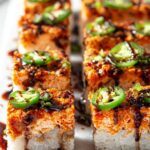
Salmon Sushi Bake Recipe
- Prep Time: 30 minutes
- Cook Time: 25 minutes
- Total Time: 55 minutes
- Yield: 12 pieces
- Category: Main Course
- Method: Baking
- Cuisine: Japanese-American
Description
Delicious Salmon Sushi Bake featuring layers of tender sticky rice, nori sheets, creamy cream cheese, and flavorful baked salmon mixed with sriracha mayo, perfectly baked and topped with furikake, eel sauce, and fresh garnishes for a crowd-pleasing sushi-inspired casserole.
Ingredients
Main Ingredients
- 1 ½ - 2 pounds wild sockeye salmon filet
- 2 tablespoons soy sauce
- 32 ounces ready-made cooked sticky rice (or 3 cups dried sushi rice, cooked according to package)
- 2 tablespoons rice vinegar
- 2-3 nori sheets
- 16 ounces cream cheese (softened to room temperature)
- ½ cup sriracha mayonnaise
- ½ cup chopped green onions
- 3 tablespoons eel sauce (or oyster sauce)
- 1-2 tablespoons furikake rice seasoning
Optional Garnishes
- Thinly sliced radish
- Thinly sliced cucumbers
- Thinly sliced jalapeno
- Thinly sliced avocado
- Pickled ginger
Instructions
- Preheat and Prepare Salmon: Preheat the oven to 400°F. Lay out a large rimmed baking sheet lined with parchment paper. Place the salmon filet on the parchment paper and drizzle 2 tablespoons of soy sauce over the top.
- Bake Salmon: Bake the salmon for 15 minutes until cooked through, then remove from oven and allow to cool.
- Prepare Rice Layer: Spray a 9 x 13-inch baking dish with nonstick cooking spray. Transfer the cooked sticky rice into the dish, drizzle with 2 tablespoons of rice vinegar, toss by hand to combine, and press firmly into an even layer on the bottom of the dish.
- Add Nori Sheets: Lay the nori sheets evenly over the rice layer. Cut sheets with scissors if necessary to cover the entire surface.
- Spread Cream Cheese: Gently spread the softened cream cheese evenly over the nori sheets using a large flat frosting spreader to create a smooth layer.
- Mix Salmon and Sriracha Mayo: Once the salmon is cooled, remove and discard the skin. Crumble the salmon into a mixing bowl, add the sriracha mayonnaise, and mix thoroughly until combined.
- Assemble Salmon Layer: Spread the salmon and mayo mixture evenly over the cream cheese layer.
- Bake the Sushi Bake: Place the assembled dish in the oven and bake for 10 to 15 minutes until the salmon layer is set and heated through.
- Cool Before Serving: Remove from the oven and allow to cool for at least 10 minutes; alternatively, refrigerate until cold before cutting into pieces.
- Garnish and Serve: Cut the sushi bake into 12 to 24 pieces. Sprinkle furikake rice seasoning on top, drizzle eel sauce over each piece, and sprinkle chopped green onions. Add optional fresh garnishes like thin slices of cucumber, radish, jalapeño, or avocado as desired.
Notes
- This recipe offers a unique, baked twist on classic sushi that is easy to prepare and serves many.
- Use wild sockeye salmon for best flavor and texture.
- Ready-made cooked sticky rice saves time, but homemade cooked sushi rice works well too.
- Sriracha mayo can be adjusted for heat preference or substituted with spicy mayo alternatives.
- Ensure cream cheese is softened to easily spread over nori without tearing.
- Nori sheets can be cut to fit the baking dish perfectly for even layering.
- Furikake seasoning adds an authentic Japanese flair, but can be omitted if unavailable.
- Refrigerating before cutting helps the sushi bake hold its shape better.
- Optional garnishes add color, texture, and fresh flavors to balance the richness.
Nutrition
- Serving Size: 1 piece
- Calories: 325 kcal
- Sugar: 2 g
- Sodium: 511 mg
- Fat: 17 g
- Saturated Fat: 5 g
- Unsaturated Fat: 10 g
- Trans Fat: 0.02 g
- Carbohydrates: 26 g
- Fiber: 0.2 g
- Protein: 17 g
- Cholesterol: 56 mg


Leave a Reply