
There’s something incredibly comforting about creamy pasta, sizzling steak, and melted cheese all mingling in one dish. This Philly Cheesesteak Pasta Recipe takes the classic Philly cheesesteak flavors and transforms them into a cozy, pasta dinner that’ll quickly become a favorite in your weeknight rotation.

Jump to:
Why You'll Love This Recipe
This Philly Cheesesteak Pasta Recipe is one of those dishes that feels indulgent but is surprisingly simple to whip up. I absolutely love how the tender steak strips combine with sweet sautéed peppers and onions, all wrapped up in a luscious creamy sauce. It really hits all the comfort-food notes.
- Elevated Comfort Food: You get all the best flavors of a Philly cheesesteak sandwich in a pasta dish that's creamy, cheesy, and delightful to eat.
- Quick and Easy: From start to finish, this meal comes together in about 25 minutes—perfect for busy evenings when you want something satisfying fast.
- Flexible Pasta Choices: While pappardelle is delicious here, you can easily swap in tagliatelle, spaghetti, or fettuccine depending on what you have on hand.
- Perfectly Balanced: The steak delivers protein, while the peppers and creamy sauce bring melt-in-your-mouth flavor and richness, making every bite a winner.
Ingredients & Why They Work
Every ingredient in this Philly Cheesesteak Pasta Recipe plays a specific role to build up those rich, classic flavors. From the tender steak to the creamy sauce, each component layers to make a really satisfying dish. Let’s break down why these work so well together—and some tips on picking the best ones.

- Pappardelle pasta: Its wide ribbons hold onto that creamy sauce beautifully, making every forkful satisfying. If you don’t have pappardelle, tagliatelle, spaghetti, or fettuccine are fabulous stand-ins.
- Steak (fillet or ribeye): Choose a cut that’s tender and flavorful—ribeye adds a bit more fat and richness, while fillet is leaner but still juicy. Slice into thin strips so they cook quickly and evenly.
- Neutral oil: Avocado or rapeseed oil works great here for high-heat frying without overpowering the dish’s flavors.
- Salt and black pepper: Simple seasoning that brings out the natural flavors of the steak and veggies.
- Butter: Adds richness and helps soften the onions and peppers without burning.
- Onion and green bell pepper: These veggies provide sweetness and a little crunch, echoing the classic Philly cheesesteak vibe perfectly.
- Garlic: Just a touch adds aromatic depth without stealing the show.
- Double (heavy) cream: Makes the sauce luxuriously creamy and coats every piece of pasta and steak in silky goodness.
- Worcestershire sauce: That secret umami punch that rounds out the whole dish and gives it depth.
- Ready-grated mozzarella cheese: Mozzarella melts beautifully here, making the sauce gooey and cheesy in all the right ways. Pre-grated is a time-saver, but fresh mozzarella will work if you prefer.
Make It Your Way
I love that this Philly Cheesesteak Pasta Recipe is easy to tweak to your taste. Over the years, I’ve swapped veggies, experimented with different cheeses, and even crafted a vegetarian version that’s just as comforting.
- Variation: Once, I swapped the green bell pepper for red and yellow peppers for a pop of color and a slightly sweeter flavor that my kids adored. It’s a small change but makes the dish feel bright and fresh.
- Vegetarian twist: You can skip the steak and add sautéed mushrooms or smoked tofu for a similar savoriness without meat.
- Cheese swap: If mozzarella isn’t your favorite, provolone or Monterey Jack work beautifully here to keep that melty, stringy goodness.
- Spice it up: Sprinkle in some crushed chili flakes or add a dash of hot sauce for a bit of heat that wakes up the creamy sauce.
Step-by-Step: How I Make Philly Cheesesteak Pasta Recipe

Step 1: Get that pasta cooking
Start by boiling your pasta in salted water according to the package instructions—usually around 10 to 12 minutes for pappardelle. I always save about a cup of the pasta water before draining because it’s magic for loosening up the sauce later if it feels too thick.
Step 2: Sear the steak strips
While the pasta cooks, heat your neutral oil over high heat in a large skillet. Once shimmering hot, add the steak strips, season with salt and pepper, and fry for 3-4 minutes until nicely browned but still tender inside. Don’t overcrowd the pan—work in batches if you need to. Then set the steak aside in a bowl to rest.
Step 3: Sauté the veggies
Turn the heat down to medium-high and add butter to the pan. Let it melt, then add the thickly sliced onion and green bell pepper. Stir these for about 3 minutes until they start to soften and smell sweet. Toss in the minced garlic, cooking for just 30 seconds to avoid burning.
Step 4: Create that creamy sauce
Pour in the double cream and Worcestershire sauce, stirring everything together. Let the sauce come to a gentle simmer before adding the steak and any juices back to the pan. Lower the heat to keep everything warm and meld those flavors.
Step 5: Toss pasta, cheese, and finish
Add the drained pasta straight into the pan with your veggies, steak, and sauce. Toss everything together gently until your pasta is beautifully coated. If the sauce seems too thick, just add a splash of that reserved pasta water little by little—it makes the sauce silky and smooth. Finally, sprinkle the grated mozzarella over the top and stir until melted and luscious. Finish with a good crack of black pepper and serve right away.
Top Tip
After making this Philly Cheesesteak Pasta Recipe countless times, I've learned a few tricks that really bring it to the next level. These tips helped me avoid common mistakes, so you get that rich, creamy, perfectly balanced pasta every time.
- Don’t overcook the steak: Sear it quickly on high heat so it stays tender and juicy without turning chewy.
- Reserve pasta water: Adding the starchy water helps loosen your sauce without watering it down, keeping it creamy and clinging beautifully to your pasta.
- Use good quality cheese: Pre-grated mozzarella saves time, but if you can, freshly grate it yourself for a creamier melt.
- Season last: Taste your sauce after adding everything together—sometimes the Worcestershire and cheese add enough saltiness, so you can avoid oversalting.
How to Serve Philly Cheesesteak Pasta Recipe

Garnishes
I like topping this pasta with a little extra cracked black pepper and fresh chopped parsley to brighten things up. Sometimes, I add a sprinkle of crushed red pepper flakes if we’re feeling adventurous. A dusting of Parmesan can work if you want a sharper cheesy note, but mozzarella really makes the dish shine.
Side Dishes
This hearty pasta pairs well with a crisp green salad—something light with a tangy vinaigrette to cut through the richness. You can also serve it alongside garlic bread or warm crusty rolls to soak up every bit of the sauce.
Creative Ways to Present
For casual dinner parties, I sometimes serve the pasta in individual skillet pans right at the table—it keeps everything warm and adds a fun rustic touch. Alternatively, layering the pasta in a shallow baking dish and finishing it briefly under the broiler with more cheese on top creates a bubbly, golden crust that’s always a crowd-pleaser.
Make Ahead and Storage
Storing Leftovers
Leftovers keep really well in an airtight container in the fridge for up to 3 days. The sauce might thicken after chilling, but just stir in a splash of milk or cream when reheating to bring it back to that silky texture.
Freezing
I don’t usually freeze this dish because the creamy sauce can separate a bit upon thawing, but if you must, freeze it in portion-sized containers and thaw overnight in the fridge. Adding a little cream or broth when reheating helps restore the sauce’s smooth consistency.
Reheating
I gently reheat leftover Philly Cheesesteak Pasta in a skillet over low heat, stirring frequently and adding a splash of milk or cream as needed to keep it from drying out. Microwave reheating can work in a pinch but can sometimes make the sauce separate.
Frequently Asked Questions:
Absolutely! While pappardelle works beautifully to catch the sauce, tagliatelle, spaghetti, or fettuccine are great alternatives depending on what you have on hand. Just cook according to the package instructions.
Ribeye is my favorite because it’s flavorful and tender with a nice fat content that adds richness. However, fillet works well too if you prefer a leaner option. The key is slicing it thinly for quick cooking.
You can! Swap the double cream for coconut cream or a dairy-free cream alternative, use vegan cheese or nutritional yeast for the cheesy flavor, and replace steak with hearty mushrooms or plant-based meat substitutes.
The trick is using reserved pasta cooking water. Adding it gradually helps you loosen the sauce without thinning out the flavor. Start with a little, tossing as you go, until you get your desired creaminess.
Final Thoughts
This Philly Cheesesteak Pasta Recipe really holds a special spot for me—it’s a cozy, flavorful meal that feels like a hug from the inside. Easy enough for weeknights but tasty enough to impress friends, it’s become a go-to in my kitchen when I want something comforting with a bit of indulgence. I hope you find it as satisfying and enjoyable as I do. Give it a try—I can’t wait to hear how you make it your own!
Print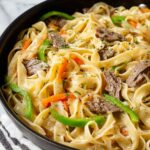
Philly Cheesesteak Pasta Recipe
- Prep Time: 10 minutes
- Cook Time: 15 minutes
- Total Time: 25 minutes
- Yield: 4 servings
- Category: Main Course
- Method: Frying
- Cuisine: American
Description
Philly Cheesesteak Pasta features tender strips of steak, sautéed onions and green bell peppers, tossed with pappardelle pasta in a rich, creamy cheese sauce. This dish combines the classic flavors of a Philly cheesesteak sandwich with the comfort of pasta for an indulgent and satisfying meal.
Ingredients
Pasta
- 300 g dried pappardelle pasta
Meat and Vegetables
- 2 tablespoon neutral oil (such as avocado or rapeseed)
- 400 g fillet or ribeye steak, sliced into 1 cm thick strips
- ½ teaspoon salt
- ½ teaspoon black pepper
- 1 tablespoon salted butter
- 1 onion, peeled and thickly sliced
- 1 green bell pepper, thickly sliced
- 2 cloves garlic, peeled and minced
Sauce and Cheese
- 240 ml double (heavy) cream
- 1 tablespoon Worcestershire sauce
- 100 g ready-grated mozzarella cheese
- Black pepper, to taste
Instructions
- Cook the pasta: Prepare the pasta according to the package instructions in a large pot of salted boiling water, usually about 12 minutes. Drain the pasta and reserve 1 cup of the cooking water for later use.
- Brown the steak: Heat the neutral oil in a large frying pan over high heat until hot. Add the sliced steak along with salt and black pepper and fry for 3-4 minutes until nicely browned. Remove the steak from the pan and set aside in a bowl.
- Sauté vegetables: Lower the heat to medium-high and add the butter to the pan. Once melted, add the sliced onion and green bell pepper. Cook for about 3 minutes until they begin to soften.
- Add garlic and sauce: Stir in the minced garlic and cook for 30 seconds until fragrant. Pour in the double cream and Worcestershire sauce, allowing the mixture to come to a gentle simmer.
- Combine steak and sauce: Return the browned steak and any juices to the pan. Reduce the heat to low to keep everything warm.
- Toss pasta with sauce: Add the cooked and drained pasta to the pan along with the vegetables, steak, and sauce. Toss everything together, adding reserved pasta water in small amounts if the sauce needs loosening. Adjust seasoning with salt and black pepper as needed.
- Melt the cheese and serve: Sprinkle the grated mozzarella cheese over the pasta and stir until melted and incorporated into the sauce. Serve with a fresh grind of black pepper on top.
Notes
- Use tagliatelle, spaghetti, or fettuccine as pasta alternatives if pappardelle is unavailable.
- Use a good quality ribeye or fillet steak for tenderness and flavor.
- For a lighter option, substitute double cream with half cream and half milk, though the sauce will be less rich.
- To add extra flavor, consider adding a splash of beef broth to the sauce.
- This dish is best served immediately to enjoy the melted cheese and creamy sauce.
Nutrition
- Serving Size: 1 serving
- Calories: 802 kcal
- Sugar: 6 g
- Sodium: 605 mg
- Fat: 43 g
- Saturated Fat: 21 g
- Unsaturated Fat: 18 g
- Trans Fat: 0.1 g
- Carbohydrates: 63 g
- Fiber: 3 g
- Protein: 40 g
- Cholesterol: 156 mg


Leave a Reply