
There's something about that perfect blend of sweet and tangy flavors in the Maple Dijon Chicken with Roasted Vegetables Recipe that makes this dish truly unforgettable. The caramelized maple glaze paired with crispy roasted veggies just fills your kitchen with warmth and comfort—trust me, it’s worth every minute in the kitchen.

Jump to:
Why You'll Love This Recipe
I remember the first time I made this Maple Dijon Chicken with Roasted Vegetables Recipe — the sauce was deceptively simple but packed so much flavor, and the roasted Brussels sprouts and sweet potatoes added just the right touch of sweetness and earthiness. It quickly became a staple in my weeknight dinner rotation.
- Balanced Sweet & Tangy Flavors: The maple syrup and Dijon mustards create a harmonious taste that’s both comforting and sophisticated.
- One-Pan Convenience: Roasting chicken and vegetables together saves time on cleanup and locks in incredible flavor.
- Perfect For Busy Nights: You can prep fast, then just let the oven do the work while you unwind or get other things done.
- Nutritious & Satisfying: Packed with protein and fiber, this dish feels indulgent but fuels your body well.

Ingredients & Why They Work
The ingredients in this Maple Dijon Chicken with Roasted Vegetables Recipe work together beautifully because each element brings its own special character — from the bright acidity in the apple cider vinegar to the richness of the chicken thighs and earthy sweetness in the root vegetables. Here’s why I love each one and some tips when shopping:

- Boneless skinless chicken thighs: I choose thighs for their juicy, tender texture—they hold up well during roasting without drying out.
- Dijon mustard (both smooth and whole grain): Combining these gives the sauce richness and a little texture contrast that feels extra special.
- Pure maple syrup: Use real maple syrup for that deep, complex sweetness; it caramelizes beautifully on the chicken and veggies.
- Apple cider vinegar: Adds just enough tang to balance out the sweetness and brighten the whole dish.
- Sweet potatoes: Their natural sweetness complements the maple syrup and roast up tender and fluffy inside.
- Brussels sprouts: I love how these get crispy on the edges while staying tender inside—roasting intensifies their flavor.
- Canola, avocado, or grapeseed oil: These neutral oils handle high heat roasting perfectly without overpowering flavors.
- Seasonings (paprika, salt, pepper): Simple but essential for layering flavor and giving the chicken a subtle hint of warmth.
Make It Your Way
I often tweak this Maple Dijon Chicken with Roasted Vegetables Recipe depending on what’s in my fridge or the season. It’s a great base to experiment with flavors or swap out veggies without losing the essence of what makes it so delicious.
- Vegetable swaps: I’ve tried adding carrots, parsnips, or cauliflower for a different twist — they roast well and soak up that maple Dijon glaze beautifully.
- Spice it up: Sometimes I add a pinch of cayenne or smoked paprika to add a gentle heat that contrasts nicely with the sweetness.
- Make it gluten-free: This recipe is naturally gluten-free if you double-check your Dijon mustard label, making it friendly for most diets.
- Portion size adjustments: For a crowd, simply double the ingredients and use a larger roasting pan or baking sheet.
Step-by-Step: How I Make Maple Dijon Chicken with Roasted Vegetables Recipe
Step 1: Prep and Season Your Chicken
First, I preheat my oven to 425°F (220°C), then spread a thin layer of oil in a large cast iron skillet—it helps develop a nice sear and prevents sticking. I pat the chicken thighs dry, then sprinkle them evenly with paprika and a pinch of salt. Seasoning now sets the foundation for all those lovely layers of flavor.
Step 2: Whisk Together the Maple Dijon Sauce
While the oven heats, I whisk together the smooth Dijon mustard, whole grain Dijon mustard, pure maple syrup, apple cider vinegar, and coarse kosher sea salt. This combo makes a sticky, tangy glaze that caramelizes beautifully when roasted. I spoon about a third of this sauce over the chicken, making sure each piece is coated but not drowning in sauce.
Step 3: Roast Chicken and Begin Adding Veggies
I place the skillet in the oven and roast the chicken for 10 minutes. Then, I take it out to spoon half of the remaining sauce over the chicken and toss in the diced sweet potatoes. Back into the oven it goes for another 10 minutes. This staged roasting allows the chicken to start cooking while the sweet potatoes soften and soak up the flavors.
Step 4: Add Brussels Sprouts and Finish Roasting
After that, I remove the skillet again, spoon the last bit of sauce over everything, and add the halved Brussels sprouts. They roast alongside the chicken and sweet potatoes for about 20 minutes, or until everything is tender and has those irresistible caramelized edges. This is the moment your kitchen will start smelling heavenly.
Step 5: Serve and Enjoy Immediately
Right out of the oven, this dish is best served immediately—hot, juicy chicken paired with soft, roasted veggies glazed in that sticky maple Dijon sauce. I usually plate it straight from the skillet for a rustic, cozy vibe, perfect for any dinner.
Top Tip
From making this recipe dozens of times, I’ve learned a few things that ensure your Maple Dijon Chicken with Roasted Vegetables Recipe turns out perfectly every time. These little tricks can save you from common pitfalls like dry meat or unevenly cooked veggies.
- Dry the chicken: I always pat my chicken thighs dry before seasoning to get a nice crust and avoid steaming in the oven.
- Uniform veggie sizes: Cutting your sweet potatoes and Brussels sprouts into similar-sized pieces helps them cook evenly without one overcooking or undercooking.
- Add veggies in stages: Adding sweet potatoes first and Brussels sprouts later ensures everything finishes perfectly without mushy sprouts or underdone potatoes.
- Watch the oven temp: Roasting at 425°F creates that beautiful caramelization I love but keep an eye near the end to prevent burning, especially if your oven runs hot.
How to Serve Maple Dijon Chicken with Roasted Vegetables Recipe
Garnishes
I like to finish this dish with a sprinkle of fresh thyme or chopped parsley—herbs add a burst of color and freshness that balances the rich glaze. Sometimes a squeeze of lemon juice brightens everything up nicely, especially on days when you want a little extra zing.
Side Dishes
This recipe stands well on its own, but I sometimes serve it alongside a simple green salad or garlic butter rice to soak up any extra sauce. For a heartier meal, roasted garlic mashed potatoes are an indulgent pairing that everyone raves about.
Creative Ways to Present
For special occasions, I love plating the chicken atop a bed of creamy polenta or even wild rice for an elegant presentation. Serving it family-style in a rustic skillet right from the oven also feels welcoming and perfect for cozy dinners with friends.
Make Ahead and Storage
Storing Leftovers
Leftover Maple Dijon Chicken with Roasted Vegetables keeps beautifully in an airtight container in the fridge for up to 3 days. I like to separate the chicken from the veggies if possible, so both retain their best texture.
Freezing
I’ve frozen this dish successfully by portioning it into freezer-safe containers. Just be aware that the texture of Brussels sprouts can change slightly after freezing, but the flavor stays delicious. Thaw overnight in the fridge before reheating.
Reheating
To reheat, I prefer warming it gently in the oven at 325°F for about 15-20 minutes to avoid drying out the chicken. If I’m short on time, the microwave works fine—just cover to keep moisture in.
Frequently Asked Questions:
You can swap chicken breasts for thighs, but be aware they cook faster and tend to dry out more easily. If you do, watch the roasting time closely and consider marinating the breasts beforehand to keep them juicy.
If you don’t have whole grain Dijon, just use more smooth Dijon mustard. The whole grain variety adds texture, but the flavor won’t be significantly different without it.
To make this vegan, try substituting chicken with firm tofu or seitan and roast the veggies separately before tossing everything in a maple Dijon glaze made without honey or animal products. The texture and flavor will change but it’s still delicious!
Chicken thighs should reach an internal temperature of 165°F (75°C) to be safe. Using a meat thermometer is the best way to check; the meat should be tender and juices run clear when pierced.
Final Thoughts
This Maple Dijon Chicken with Roasted Vegetables Recipe holds a special place in my kitchen because it balances simplicity and elegance so effortlessly. It’s the kind of meal that comforts and impresses without hours of fuss—perfect for sharing with family or winding down after a busy day. I can’t wait for you to try it and make it your own!
Print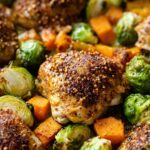
Maple Dijon Chicken with Roasted Vegetables Recipe
- Prep Time: 20 minutes
- Cook Time: 40 minutes
- Total Time: 1 hour
- Yield: 4 servings
- Category: Main Course
- Method: Baking
- Cuisine: American
Description
Maple Dijon Chicken and Vegetables is a delicious and elegant one-pan meal featuring tender chicken thighs glazed with a sweet and tangy maple Dijon sauce, roasted alongside sweet potatoes and Brussels sprouts for a wholesome, flavorful dinner perfect for busy weeknights.
Ingredients
Chicken and Sauce
- 2 tsp. canola (avocado or grapeseed) oil
- 1 ½ lb. boneless skinless chicken thighs
- ½ tsp. paprika
- ¼ cup Dijon mustard
- ¼ cup whole grain Dijon mustard
- ⅓ cup pure maple syrup
- 1 tbsp. apple cider vinegar
- ½ tsp. coarse kosher sea salt
Vegetables
- 2 cups diced sweet potatoes (¾-inch cubes)
- 2 cups halved Brussels sprouts
- 2 tsp. canola (avocado or grapeseed) oil
- Salt and ground black pepper, to taste
Instructions
- Preheat Oven: Preheat your oven to 425°F (220°C) to ensure it is ready for roasting the chicken and vegetables.
- Prepare Chicken: Spread 2 teaspoons of oil on the bottom of a large cast iron skillet or Dutch oven. Place the chicken thighs in the skillet and season with ½ teaspoon paprika evenly on top.
- Make Sauce: In a medium bowl, whisk together ¼ cup Dijon mustard, ¼ cup whole grain Dijon mustard, ⅓ cup pure maple syrup, 1 tablespoon apple cider vinegar, and ½ teaspoon of coarse kosher sea salt until well combined to form the maple Dijon sauce.
- Initial Baking: Spoon about one-third of the sauce over the chicken thighs. Place the skillet in the oven and bake for 10 minutes to start cooking the chicken.
- Add Sweet Potatoes: Remove the skillet from the oven and spoon half of the remaining sauce over the chicken. Add the diced sweet potatoes around the chicken, seasoning them with salt and pepper if desired. Return the skillet to the oven and bake for another 10 minutes.
- Add Brussels Sprouts: Remove the skillet again and spoon the remaining sauce over the chicken. Add the halved Brussels sprouts to the skillet, distributing them evenly with the other ingredients. Return to the oven and bake for 20 more minutes until the chicken is cooked through and the vegetables are fork-tender.
- Serve: Remove the skillet from the oven and serve the Maple Dijon Chicken and Vegetables immediately while hot and flavorful.
Notes
- This dish combines sweet, tangy, and savory flavors for an elegant yet simple weeknight meal.
- You can substitute the chicken thighs with skinless chicken breasts, but cooking times may vary.
- Using a cast iron skillet or Dutch oven helps achieve even roasting and great caramelization on the chicken and vegetables.
- If you prefer spicier flavors, add a pinch of cayenne pepper to the sauce or seasonings.
- For a lower sugar option, reduce the maple syrup slightly or use a sugar-free syrup alternative.
Nutrition
- Serving Size: 1 serving
- Calories: 472 kcal
- Sugar: 20 g
- Sodium: 864 mg
- Fat: 13 g
- Saturated Fat: 2 g
- Unsaturated Fat: 10 g
- Trans Fat: 0.05 g
- Carbohydrates: 50 g
- Fiber: 10 g
- Protein: 40 g
- Cholesterol: 162 mg


Leave a Reply