
There's something incredibly comforting about the creamy, nutty flavors wrapped around tender dumplings in this Baked Satay Dumplings in Coconut Sauce Recipe. It’s a tasty one-pan wonder that’s surprisingly simple but feels seriously special every time I make it.

Jump to:
- Why You'll Love This Recipe
- Ingredients & Why They Work
- Make It Your Way
- Step-by-Step: How I Make Baked Satay Dumplings in Coconut Sauce Recipe
- Top Tip
- How to Serve Baked Satay Dumplings in Coconut Sauce Recipe
- Make Ahead and Storage
- Frequently Asked Questions:
- Final Thoughts
- Baked Satay Dumplings in Coconut Sauce Recipe
Why You'll Love This Recipe
This recipe hits the spot when you want something comforting yet fresh, with those bold Asian flavors wrapped around juicy dumplings. Plus, it’s a hands-off, oven-baked dish that delivers big on flavor and requires minimal fuss—perfect for busy weeknights or casual dinner parties.
- Easy One-Pan Magic: You toss everything into one dish, pop it in the oven, and let the sauce work its creamy, spicy magic.
- Frozen Dumplings Made Gourmet: This sauce takes store-bought dumplings from simple to sensational in just 30 minutes.
- Balanced Flavors: The peanut butter’s richness blends beautifully with gochujang’s heat, the sweetness from chili jam, and the freshness of coconut milk.
- Customizable & Crowd-Friendly: Whether you prefer pork, chicken, or veggie dumplings, this recipe welcomes them all and pleases every palate.
Ingredients & Why They Work
The ingredients here create a rich, saucy bed where dumplings cook tender and soak in those classic satay vibes. The blend of peanut butter and coconut milk is key to that creamy texture, while savory umami from soy and fish sauce amps up the depth. Gochujang and sweet chili jam bring a gentle kick and sweetness that complements every bite wonderfully.

- Smooth Peanut Butter: Provides the signature satay thickness and nutty flavor—you want it smooth for that perfect sauce consistency.
- Gochujang Paste: Adds a subtle spicy kick with a touch of fermented depth—start small if you’re spice-sensitive.
- Sweet Chilli Jam: Balances heat with sweetness and adds a lovely glaze to the sauce.
- Soy Sauce: Brings salty umami that ties all the flavors together.
- Fish Sauce: A little goes a long way to deepen the savory backbone of the sauce.
- Garlic and Ginger: Classic aromatics that brighten and freshen the dish beautifully.
- Sesame Oil: Adds a toasty, nutty aroma right before baking.
- Coconut Milk: The secret weapon for creamy, tropical richness that mellows the spice.
- Frozen Dumplings: Your choice of pork, chicken, or veggie—frozen keeps it convenient, and the sauce does the rest.
- Edamame Beans: Little pops of green and protein, adding texture.
- Bok Choy: Bright, leafy greens that wilt nicely and add freshness.
- Chili Oil: For drizzling at the end to add an extra layer of heat and shine.
- Sesame Seeds, Scallions, Cilantro, Crushed Peanuts, and Crispy Onions: The finishing touches that provide crunch, vibrant flavors, and a fresh herbal kick.
- Lime Wedges: To squeeze over the top and balance the richness with a touch of acidity.
Make It Your Way
I love tweaking this dish depending on the season and what I have on hand. You can easily switch up the protein or make it veggie-friendly. And honestly? The sauce is so tasty, it pairs with lots of different add-ins beyond dumplings.
- Variation: Once I swapped dumplings for cauliflower florets and tofu for a plant-based take—it was just as delicious and a hit with my veggie-loving friends.
- Heat Level: Play around with the gochujang amount to dial up or down the spice. For a gentler approach, just stick to the chili jam.
- Make it Gluten-Free: Use tamari instead of soy sauce, and double-check your dumplings are gluten-free to keep it allergy-friendly.
- Seasonal Veggie Swap: Feel free to replace edamame and bok choy with snap peas, green beans, or shredded carrots for a crunchier texture.
Step-by-Step: How I Make Baked Satay Dumplings in Coconut Sauce Recipe

Step 1: Whisk Together the Satay Sauce
Start by preheating your oven to 400°F (200°C). Then, in your chosen baking dish or ovenproof skillet, whisk together the peanut butter, gochujang paste, sweet chili jam, garlic, ginger, soy sauce, fish sauce, and coconut milk until silky and smooth. This sauce is the heart of the dish—it’s rich, creamy, and packs all that satay punch.
Step 2: Add the Veggies and Arrange Dumplings
Scatter the edamame beans and chopped bok choy right into the sauce, giving it a gentle mix. Then arrange your frozen dumplings snugly in a single layer on top. I like to nestle them so they’re roughly half covered by the sauce, which helps them stay juicy as they bake.
Step 3: Bake Until Bubbling and Tender
Pop the dish into your preheated oven and bake for about 20 minutes. You’ll know it’s ready when the sauce is bubbling and the dumplings are cooked through—sometimes the sauce thickens and clings to the dumplings beautifully. For that irresistible, slightly crispy top, switch your oven to broil for 3 minutes at the end, but watch it closely!
Step 4: Finish with Toppings and Serve
Once out of the oven, drizzle the dumplings with chili oil for a flavorful kick. Then scatter over crushed peanuts, sesame seeds, scallions, cilantro, and crispy onions. Finally, a generous squeeze of lime brightens everything up. Serve it up straight from the pan and watch it disappear!
Top Tip
From my cooking adventures with this dish, I’ve learned a few key tips to make your Baked Satay Dumplings in Coconut Sauce Recipe come out perfect every time. These small tweaks make a big difference in texture and flavor.
- Right-Sized Baking Dish: Use a deepish pan around 9 to 11 inches so the sauce stays thick and the dumplings stay juicy instead of drying out.
- Don’t Skip Broiling: That last 3 minutes under the grill adds a lovely crunch that contrasts with the creamy sauce beautifully.
- Fresh Garnishes Matter: Adding scallions, cilantro, and crushed peanuts at the end brings freshness and texture, so don’t toss those out!
- Cover If Needed: If your dish is larger or the sauce looks thin, loosely cover it with foil while baking to keep moisture in.
How to Serve Baked Satay Dumplings in Coconut Sauce Recipe

Garnishes
I always go all out here—scallions sliced thin, vibrant fresh cilantro, toasted sesame seeds, a handful of crushed peanuts for crunch, and crispy fried onions for that irresistible texture contrast. Don’t forget the chili oil drizzle for a little smoky heat!
Side Dishes
This dish shines on its own but if you want to add sides, a simple steamed jasmine rice or fragrant coconut rice soaks up the sauce beautifully. I also like a crisp cucumber salad or quick pickled veggies to cut through the richness.
Creative Ways to Present
For special occasions, I’ve served these dumplings family-style in rustic cast iron skillets, surrounded by bowls of colorful garnishes. It looks festive and inviting, and everyone helps themselves. Adding edible flowers or finely sliced chilies can also make the presentation pop!
Make Ahead and Storage
Storing Leftovers
I let the leftovers cool completely, then store them in an airtight container in the fridge. The sauce thickens up, so just reheat gently to loosen it back up. This dish tastes great the next day, sometimes even better once the flavors have melded overnight.
Freezing
Freezing works well if you want to prep ahead. I usually freeze the dumplings with the sauce before baking. When ready to eat, thaw overnight in the fridge, then bake as usual. The texture stays surprisingly good if you don’t freeze the garnish.
Reheating
Reheat leftovers in a skillet over medium heat or in the oven to avoid soggy dumplings. Add a splash of water or coconut milk if the sauce looks too thick. Then re-garnish fresh ingredients just before serving for that vibrant finish.
Frequently Asked Questions:
Absolutely! Fresh dumplings work beautifully; just watch the baking time as fresh ones might cook a bit faster. Keep an eye to avoid overcooking so they stay tender and juicy.
Using a baking dish with a smaller surface area helps keep the sauce thicker around the dumplings. Also, you can loosely cover the dish with foil if your pan is bigger or if you notice the sauce getting too thin while baking.
Definitely. This Baked Satay Dumplings in Coconut Sauce Recipe is naturally dairy-free thanks to the coconut milk. For gluten-free, swap regular soy sauce for tamari or coconut aminos, and ensure your dumplings are gluten-free varieties.
The heat level is moderate from the gochujang paste and chili oil, but it’s balanced with sweet chili jam and coconut milk’s creaminess. You can easily adjust the spice by using less gochujang or leaving out the chili oil drizzle if you prefer mild flavors.
Final Thoughts
This Baked Satay Dumplings in Coconut Sauce Recipe really holds a special place in my kitchen rotation. It’s a little bit luxurious, a lot super satisfying, and surprisingly easy to pull off. I love how the flavors blend without needing endless prep, making it perfect when you want great taste but less stress. You’re going to enjoy making this one your own and sharing it with friends and family—you might just find it becomes an unexpected new favorite.
Print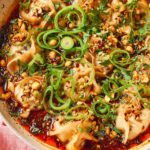
Baked Satay Dumplings in Coconut Sauce Recipe
- Prep Time: 10 minutes
- Cook Time: 20 minutes
- Total Time: 30 minutes
- Yield: 4 servings
- Category: Main Course
- Method: Baking
- Cuisine: Asian Fusion
- Diet: Halal
Description
One Pan Baked Satay Dumplings are an effortless and flavorful meal that transforms frozen dumplings into a creamy, coconutty peanut satay feast. Infused with the heat of gochujang and the sweetness of chili jam, this dish is quick to prepare and bakes to juicy perfection in a single pan, topped with fresh herbs, crunchy peanuts, and a zesty lime finish.
Ingredients
Satay Sauce
- ⅓ cup smooth peanut butter
- 1 tablespoon gochujang paste
- 1 tablespoon sweet chilli jam
- 1 tablespoon soy sauce
- 2 teaspoons fish sauce
- 2 garlic cloves, crushed
- 1 inch piece of ginger, grated
- 2 teaspoons sesame oil
- 1 × 14oz (400ml) can coconut milk
Main Ingredients
- 1 pack frozen dumplings (about 20 – 25, pork, chicken or veg)
- ½ cup frozen edamame beans
- 2 heads bok choy, chopped
Toppings and Garnishes
- 3 tablespoons chili oil
- 1 tablespoon sesame seeds
- 2 scallions, finely sliced
- A handful of cilantro leaves
- 1 tablespoon crushed peanuts
- 1 tablespoon crispy onions
- 1 lime, sliced into wedges
Instructions
- Preheat Oven and Prepare Sauce: Preheat your oven to 400°F/200°C (fan). In a baking dish or ovenproof skillet, whisk together peanut butter, gochujang paste, sweet chili jam, grated ginger, crushed garlic, soy sauce, fish sauce, sesame oil, and coconut milk until the mixture is smooth and creamy.
- Add Vegetables to Sauce: Scatter the frozen edamame beans and chopped bok choy into the sauce and stir gently to combine all ingredients evenly.
- Arrange Dumplings: Place the frozen dumplings snugly in a single layer within the sauce, ensuring they are roughly half covered by the sauce to keep them juicy during baking.
- Bake Dumplings: Transfer the baking dish to the preheated oven and bake for 20 minutes until the sauce is bubbling and the dumplings are cooked through.
- Optional Broil for Crispiness: For a golden, crispy top, broil (grill) the dumplings for an additional 3 minutes at the end of baking.
- Garnish and Serve: Drizzle the baked dumplings with chili oil, then top with crushed peanuts, sesame seeds, sliced scallions, cilantro leaves, and crispy onions. Squeeze fresh lime wedges over just before serving and enjoy immediately.
Notes
- This dish works best in a 9 to 11 inch-long ovenproof skillet or baking dish with 3 to 4 inches depth to prevent the sauce from drying out during baking.
- If using a larger baking dish, cover it with aluminum foil or a lid while baking to keep the dumplings moist.
- You can substitute the sweet chilli jam with your favorite sweet and spicy sauce if unavailable.
- To vary protein, use pork, chicken, or vegetable frozen dumplings as desired.
- Broiling at the end is optional but adds a delicious crispy top texture.
- Serve with extra lime wedges for added freshness.
Nutrition
- Serving Size: 200g
- Calories: 533 kcal
- Sugar: 13.7 g
- Sodium: 1226 mg
- Fat: 33.4 g
- Saturated Fat: 7 g
- Unsaturated Fat: 23.7 g
- Trans Fat: 0 g
- Carbohydrates: 38.9 g
- Fiber: 5.6 g
- Protein: 23.9 g
- Cholesterol: 30.8 mg


Leave a Reply